• Skip to primary navigation
  • Skip to main content
  • Skip to footer
  • New Bookings 01202 702827

Skin Clinic, Cosmetic Clinic, Laser Clinic, anti-wrinkle injections & Fillers - Bournemouth & Poole

  • Home
  • About
    • Clinics
      • Christchurch
      • Bournemouth
      • Poole
    • Team
      • Dr Helen Robertshaw
      • Dr Liliana Luna
      • Dr Alice Plant
      • Dr Andy Hodder
      • Dr Julia Martin
      • Dr Angela Gregory
      • Dr Sarah Aulds
      • Dr Adam Fityan
      • The Clinic Team
    • Reviews
    • Price Guide
    • Contact
  • Conditions
        • Acne
        • Actinic Keratosis
        • Age Spots
        • Alopecia (Hair Loss)
        • Basal Cell Carcinoma
        • Bowens Disease
        • Cysts
        • Female Pattern Hair loss
        • Eczema
        • Hyperhidrosis
        • Moles
        • Malignant Melanoma
        • Pigmentation
        • Psoriasis
        • Rosacea
        • Seborrhoeic Dermatitis
        • Seborrhoeic Keratoses
        • Skin Cancer
        • Squamous Cell Carcinoma
        • Warts and Verrucas
  • Mole Checks
  • Services
        • Medical Dermatology
          • Acne Treatments
          • Cryotherapy
          • Mole Mapping
          • Skin Cancer Screening
          • Rosacea Treatments
          • Scarring Treatments
          • Wart Treatments
          • Daylight Photodynamic Therapy
          • Hyperhidrosis Treatment
          • Sclerotherapy
          • Repeat Medications Request
          • Allergy Testing
        • Anti-Ageing Treatments
          • The Liquid Facelift
          • Chemical Peels
          • Microdermabrasion
          • Medical Facials
          • Anti-Wrinkle Injections
          • Dermal Fillers
          • Medical Microneedling
          • Hydrafacial
          • Polynucleotide Treatment
          • Sculptra
          • Profhilo Structura Treatment
        • Laser Treatments
          • AviClear
          • Laser Hair Removal
          • Thread Vein Removal
          • The 3JUVE Treatment
        • Cancer & Skin Surgery
          • Dermatological Surgery
          • Mole Removal
          • Photodynamic Therapy
        • Other
          • Nutrition Consultations
  • Women's Health
    • About
    • Vulval Clinic
    • Menopause Care
    • Coils and IUDs
    • Nutrition Consultations
    • Specialist Pelvic Health Physio
  • News
  • Booking

Allergy Testing

Patch testing is used by dermatologists to determine whether your skin condition is caused by an allergy to substances that come into direct contact with the skin (allergic contact dermatitis).

Patch testing does not detect allergies related to diet or inhaled substances that may cause symptoms such as sneezing, asthma, or hives. These reactions are investigated using skin prick testing or blood tests for specific IgE antibodies.

Patch testing requires two - three appointments over one week, and it is important that you attend all appointments on the specified days.

Patch testing is only carried out following referral from another dermatologist or after an assessment within the clinic, where allergic contact dermatitis is suspected.

Initial Consultation

Your dermatologist will review your medical history and determine which substances (allergens) should be included in your test. A pre-test diagnosis will also be discussed during this consultation.
IMG_2495

Day 1 – Saturday: Application of Patch Tests

During the test, you will be exposed to approximately 50–70 standard substances that commonly come into contact with the skin. These may include:

  • Rubber
  • Chemicals
  • Metals
  • Perfumes
  • Plants

Additional substances relevant to your particular condition may also be included. In some cases, we may test products from your workplace or home.

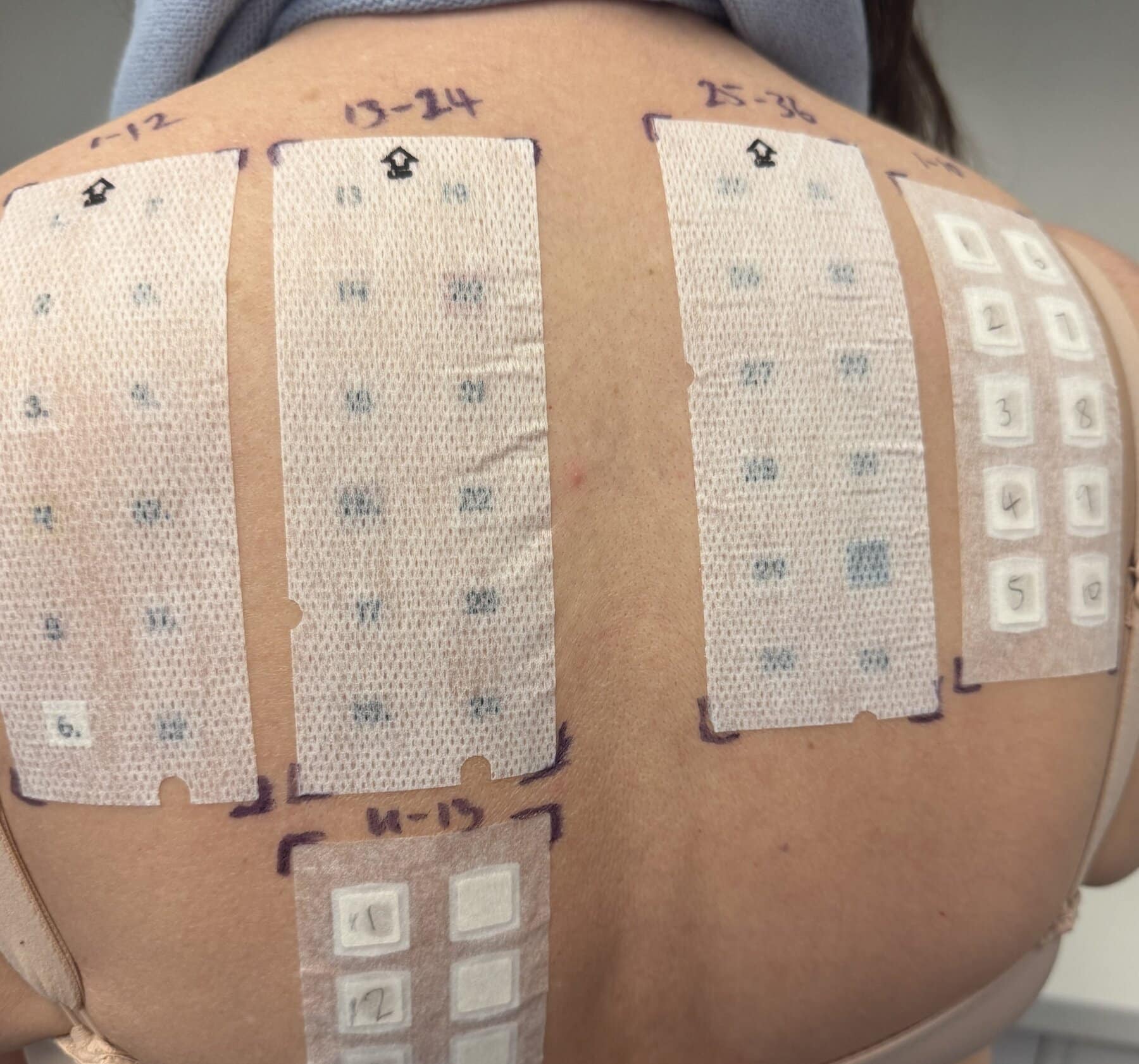
Small chambers (patches) containing the allergens are applied to your back using adhesive tape. This will be done by the patch test nurse, who will explain the procedure and answer any questions you may have.

The back is usually used as it provides a convenient testing area. Occasionally, patches may be applied to the upper arms or other areas if there is active eczema on the back or if there is insufficient space on the upper back for all test chambers.

With your consent, a photograph of the test area will be taken using your own phone to record the position of the patches.

Day 3 – Monday: Removal of Patches

The patches remain in place for 48 hours before being removed.

You will remove the patches yourself at home. After removing them, please ask a family member or friend to take a photograph of the test area using your phone.

You will be provided with a pen to remark the patch sites after removal.
Skin,Allergy,Patch,Test,On,Back,Of,Patient,Showing,Redness

Day 5 – Wednesday: Reading of Results

You will return to the clinic for the patch test reading with Dr Hodder.

The test sites will be examined, and your photographs from the previous day will also be reviewed to determine whether any reactions have occurred.

If a reaction is uncertain or doubtful, a test may need to be repeated.

Dr Hodder will discuss the results with you and explain the final diagnosis and its implications.

After the Test

Following the tests, you may bathe or shower normally.

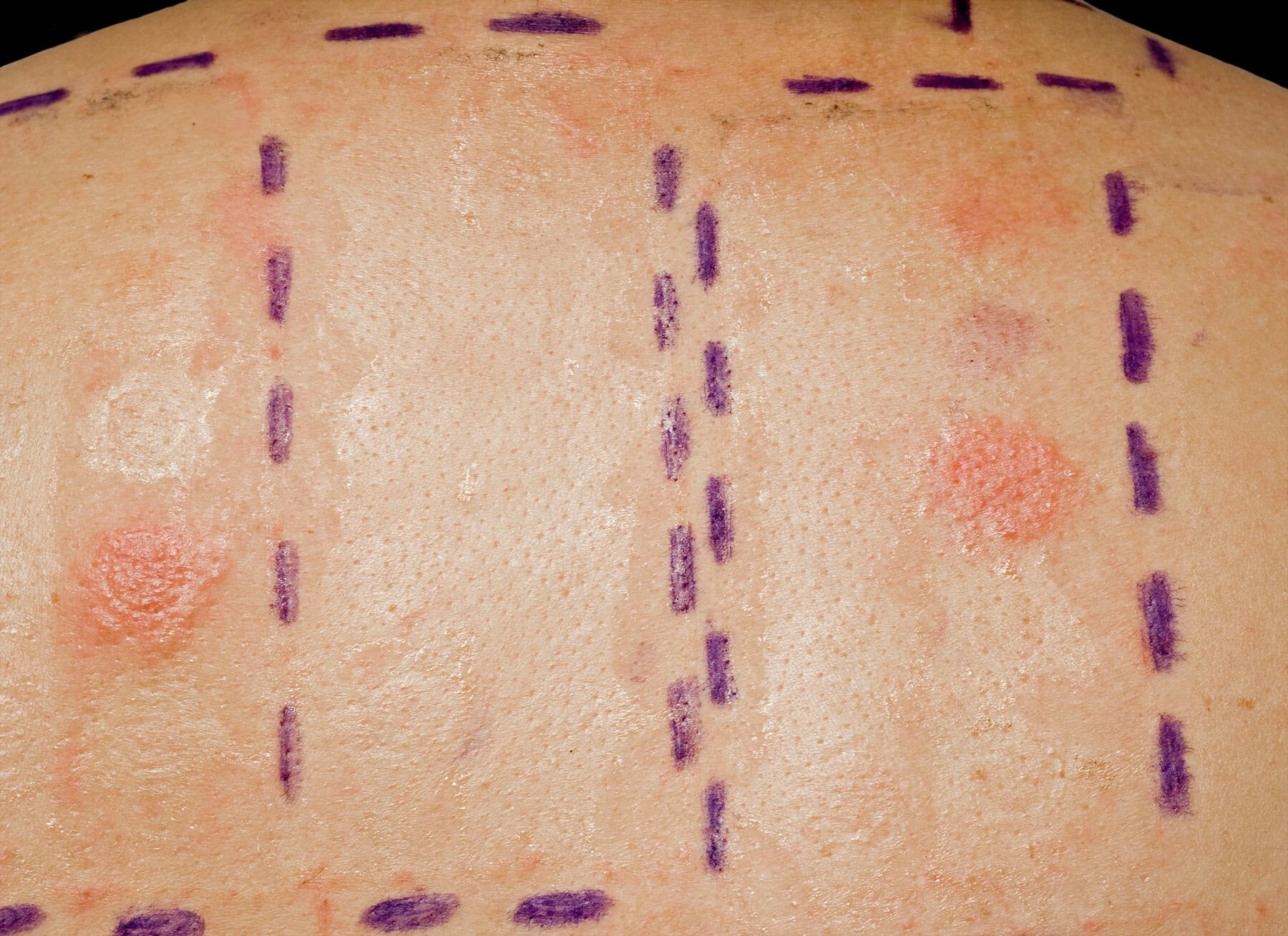
Any temporary staining of the skin will fade within a few days. Positive reactions usually settle within a few days, although occasionally they may last longer. A topical steroid cream may be prescribed to help the reaction resolve more quickly if needed.

Test Report

A written report summarising the tests performed, results, and interpretation will be sent to the referring dermatologist, with a copy provided to you.


General FAQs

How long does the testing take? Expand

The process typically takes 5 days in total. We schedule up to three appointments across a 5-day period, such as Saturday, Monday, and Wednesday.

What happens at each appointment? Expand
    • Saturday (First visit): Specialist chambers containing common allergens are applied to your upper back and secured with hypoallergenic tape.
    • Monday (Optional Second visit): The patches are removed. This can be done at home if you have someone to help. The area is photographed and remarked.
    • Wednesday (Third visit): A final reading is conducted. This is crucial because many allergic reactions are delayed and may only become visible 96 hours after the initial application.
What is the purpose of a patch test? Expand

It identifies allergic contact dermatitis caused by substances like fragrances, metals (nickel), preservatives, or rubber. It specifically detects delayed hypersensitivity, which is why the 5-day observation period is necessary.

Does it hurt? Expand

No, the test is painless and non-invasive. No needles or injections are used. You may experience some itching at the site, which is a normal part of a positive reaction.

Does it test for food allergies? Expand

No. Patch testing only identifies allergies to substances that touch the skin. It cannot diagnose food, pet, or pollen allergies.

Preparation & Restrictions

Can I shower or exercise during the test week? Expand

No. You must keep your back dry for the entire duration of the test. Moisture from showers, baths, or heavy sweating can loosen the patches and wash away the markers, making the results inaccurate.

What should I wear? Expand

Wear old, dark-coloured, loose clothing. The marker pen and certain allergens may permanently stain your clothes.

Are there medications I should avoid? Expand

You should generally stop using steroid creams on your back for at least one week before the test. Inform your specialist if you are taking oral steroids (like prednisolone) or other immunosuppressants, as these can suppress your skin’s reaction.

What about sun exposure? Expand

Avoid sunbeds and direct sun exposure on your back for at least 2 weeks prior to testing, as UV light can interfere with the results.

Results & Side Effects

What does a positive reaction look like? Expand

A positive result is typically an itchy, raised, red or pink area where the substance was applied.

What if all the results are negative? Expand

This is still a useful result. It helps your doctor rule out contact allergy as the cause of your skin condition, allowing them to look for other triggers like irritants or internal factors.

Are there any side effects? Expand

Common side effects are mild, such as a temporary flare-up of existing eczema or persistent itching at the test site for a few weeks. Rare side effects include localized blistering or temporary skin pigment changes.

Experts you can trust

Helen Robertshaw South Face Skin Bournemouth

Dr. Helen Robertshaw

Consultant Dermatologist

liliana

Dr. Liliana Luna

Dermatologist

Alice Plant

Dr. Alice Plant

Consultant Dermatologist

Andy Hodder

Dr. Andy Hodder

Consultant Dermatologist

Julia-Martin copy

Dr. Julia Martin

Speciality Dermatologist

AESTHETIC-NURSE-Bournemouth-300x300 copy

Amanda Capriani

Senior Nurse

dr-adma-fityan-bw

Dr Adam Fityan

Consultant Dermatologist

Footer

Contact Details

  • 01202 702827
  • info@southfaceskin.com
  • Bournemouth Clinic
  • Christchurch Clinic
  • Poole Clinic
  • View all

More Information

  • Book an appointment
  • Cosmetic Treatments
  • Medical Dermatology
  • Price List
  • Leave us Feedback
  • Complaints Policy
  • Privacy Policy
  • Terms and Conditions

Subscribe to Newsletter

Copyright © 2026 Southface Skin Clinic | Designed by Lewis Edward

  • Home
  • About
    • Clinics
      • Christchurch
      • Bournemouth
      • Poole
    • Team
      • Dr Helen Robertshaw
      • Dr Liliana Luna
      • Dr Alice Plant
      • Dr Andy Hodder
      • Dr Julia Martin
      • Dr Angela Gregory
      • Dr Sarah Aulds
      • Dr Adam Fityan
      • The Clinic Team
    • Reviews
    • Price Guide
    • Contact
  • Conditions
    • Acne
    • Actinic Keratosis
    • Age Spots
    • Alopecia (Hair Loss)
    • Basal Cell Carcinoma
    • Bowens Disease
    • Cysts
    • Eczema
    • Female Pattern Hair loss
    • Hyperhidrosis
    • Malignant Melanoma
    • Moles
    • Pigmentation
    • Psoriasis
    • Seborrhoeic Dermatitis
    • Rosacea
    • Seborrhoeic Keratoses
    • Skin Cancer
    • Squamous Cell Carcinoma
    • Warts and Verrucas
  • Mole Checks
  • Services
    • Medical Dermatology
      • Acne Treatments
      • Cryotherapy
      • Mole Mapping
      • Skin Cancer Screening
      • Rosacea Treatments
      • Scarring Treatments
      • Wart Treatments
      • Daylight Photodynamic Therapy
      • Hyperhidrosis Treatment
      • Sclerotherapy
      • Repeat Medications Request
      • Allergy Testing
    • Anti-Ageing Treatments
      • The Liquid Facelift
      • Chemical Peels
      • Microdermabrasion
      • Medical Facials
      • Anti-Wrinkle Injections
      • Dermal Fillers
      • Medical Microneedling
      • Hydrafacial
      • Polynucleotide Treatment
      • Sculptra
      • Profhilo Structura Treatment
    • Laser Treatments
      • AviClear
      • Laser Hair Removal
      • Thread Vein Removal
      • The 3JUVE Treatment
    • Cancer & Skin Surgery
      • Dermatological Surgery
      • Mole Removal
      • Photodynamic Therapy
    • Other
      • Nutrition Consultations
  • Women’s Health
    • About
    • Vulval Clinic
    • Menopause Care
    • Coils and IUDs
    • Nutrition Consultations
    • Specialist Pelvic Health Physio
  • News
  • Booking