
Understanding Patch Testing for Allergic Contact Dermatitis
Allergy testing can often feel confusing. Many people are surprised to learn that there isn’t just one single “allergy test” that covers everything. In reality, different types of allergies require different types of testing, and choosing the right one depends on your symptoms and medical history.
At Southface Dermatology, we frequently see patients with suspected allergic contact dermatitis—a condition where the skin reacts to substances it has come into contact with. Common triggers include fragrances, preservatives, metals such as nickel, and ingredients found in cosmetics or topical medications. Identifying the exact cause can be challenging, which is where patch testing plays a crucial role.
What is Patch Testing?
Patch testing is a specialised investigation used to diagnose allergic contact dermatitis. It is very different from other forms of allergy testing, such as skin prick tests or blood tests, which are typically used for conditions like hay fever or food allergies.
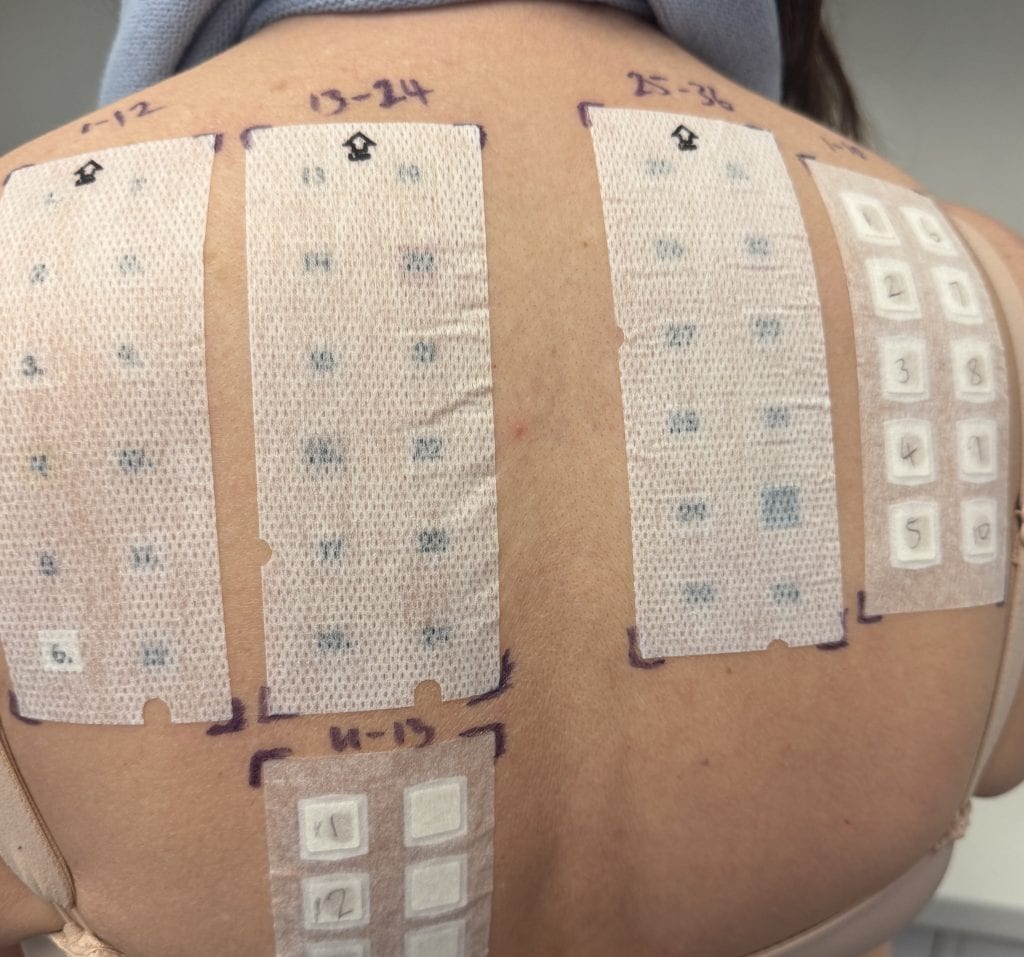
During patch testing, small amounts of common allergens are applied to the skin (usually on the back) using adhesive patches. These patches remain in place for 48 hours, and the skin is then assessed at specific intervals over several days to look for reactions. A delayed skin reaction helps identify substances that may be causing your symptoms.
Why Specialist Expertise Matters
Patch testing is a highly specialised procedure that requires expert interpretation. It is only undertaken by dermatologists who have received specific training in this area. Correctly reading and interpreting the results is essential, as reactions can sometimes be subtle or delayed.
At Southface Dermatology, our team has the expertise and experience to carry out patch testing safely and accurately, ensuring you receive a clear diagnosis and practical guidance on how to avoid your triggers.
Who Might Benefit from Patch Testing?
You may benefit from patch testing if you have:
- Persistent or recurrent eczema, particularly on the hands, face, or eyelids
- Dermatitis that does not respond to standard treatments
- A suspected reaction to cosmetics, skincare products, or workplace substances
- Occupational skin problems
Now Offering Private Patch Testing
We are pleased to announce that Southface Dermatology now offers private patch testing services to patients across the surrounding region. This allows for timely assessment, diagnosis, and tailored advice without long waiting times.
Taking the Next Step
If you are struggling with ongoing skin irritation or unexplained rashes, patch testing may provide the answers you need. Identifying and avoiding the substances responsible can make a significant difference to your skin health and quality of life.
To find out more or to book a consultation, please get in touch with our team. We are here to help you achieve clearer, healthier skin.